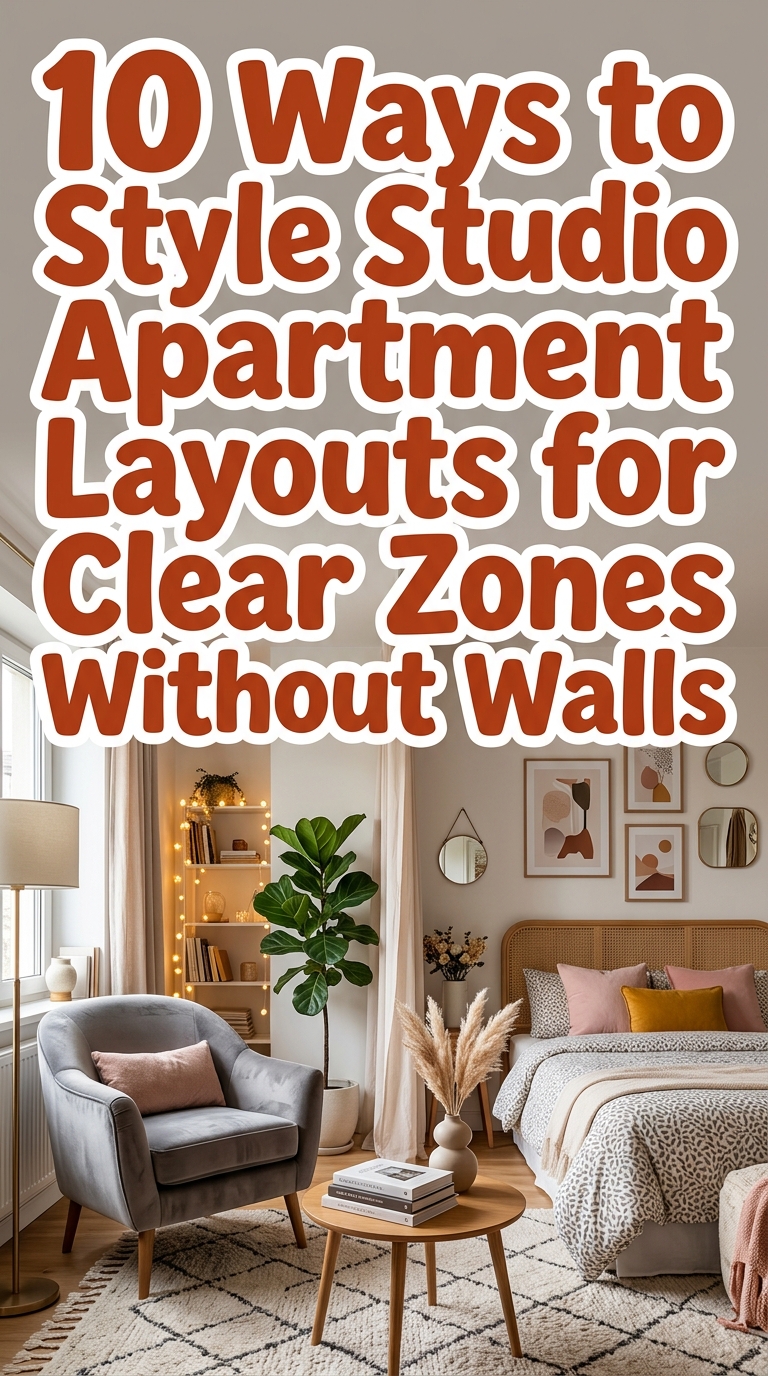
10 Ways to Style Studio Apartment Layouts for Clear Zones Without Walls
If your studio feels like one big blur, you’re not alone—most layouts don’t naturally separate “sleep,” “work,” and “hang out” zones. This article is all about how to style studio apartment layouts for clear zones without walls, using intentional furniture grouping, lighting, rugs, and smart storage. You’ll get 10 Pinterest-worthy, space-saving ideas that make the room feel organized (and way more elevated) without building anything. Think: visual boundaries, cozy cues, and flow that still feels open. Let’s turn your single room into beautifully defined spaces.
1. Float a living area with a rug + open “walkway” rule
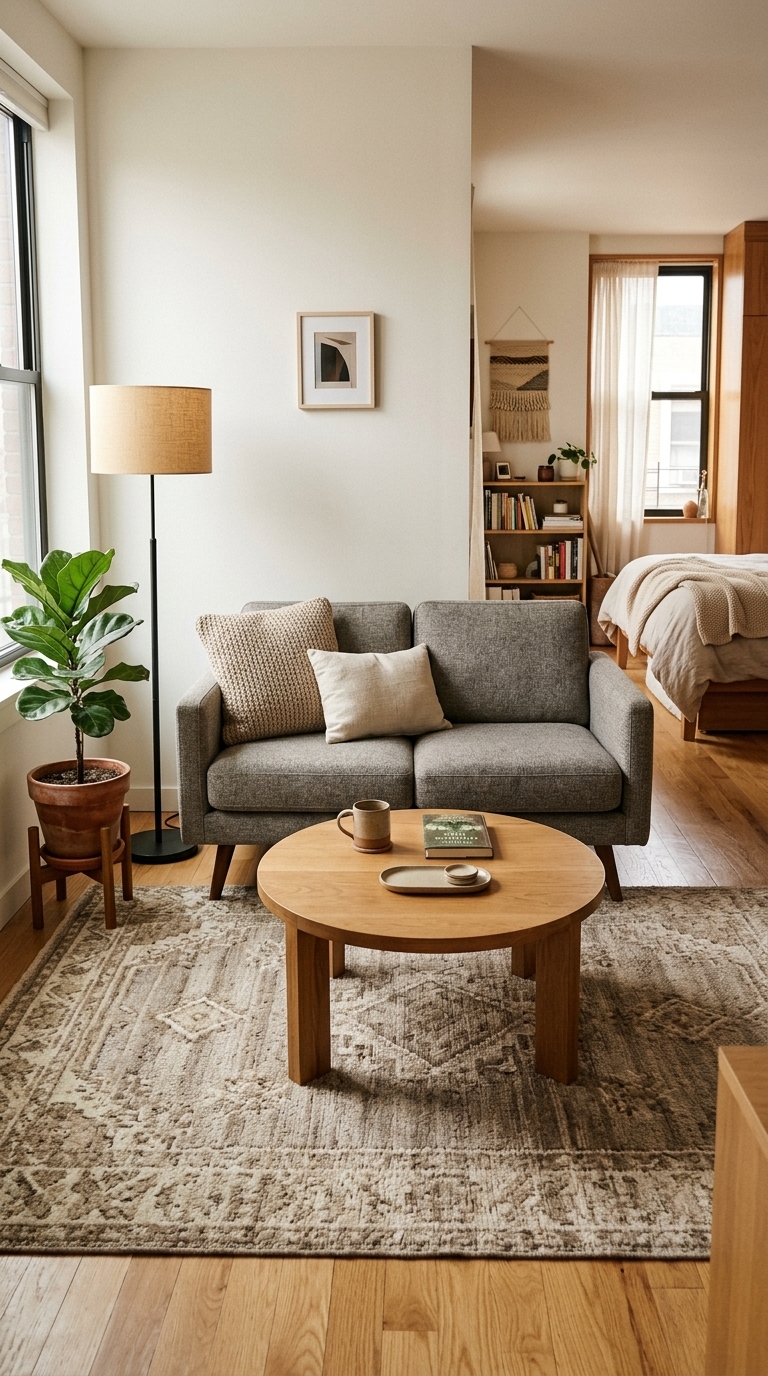
The image shows a defined living area in a studio by anchoring a compact seating setup on a patterned rug while keeping an intentional open pathway clear. The rug’s boundary makes the zone feel “separate” even though everything is in one room. It’s a great approach for anyone who wants a cozy lounge vibe without adding walls—ideal for renters with limited layout options.
2. Use a console or bar cart as a hallway-style divider
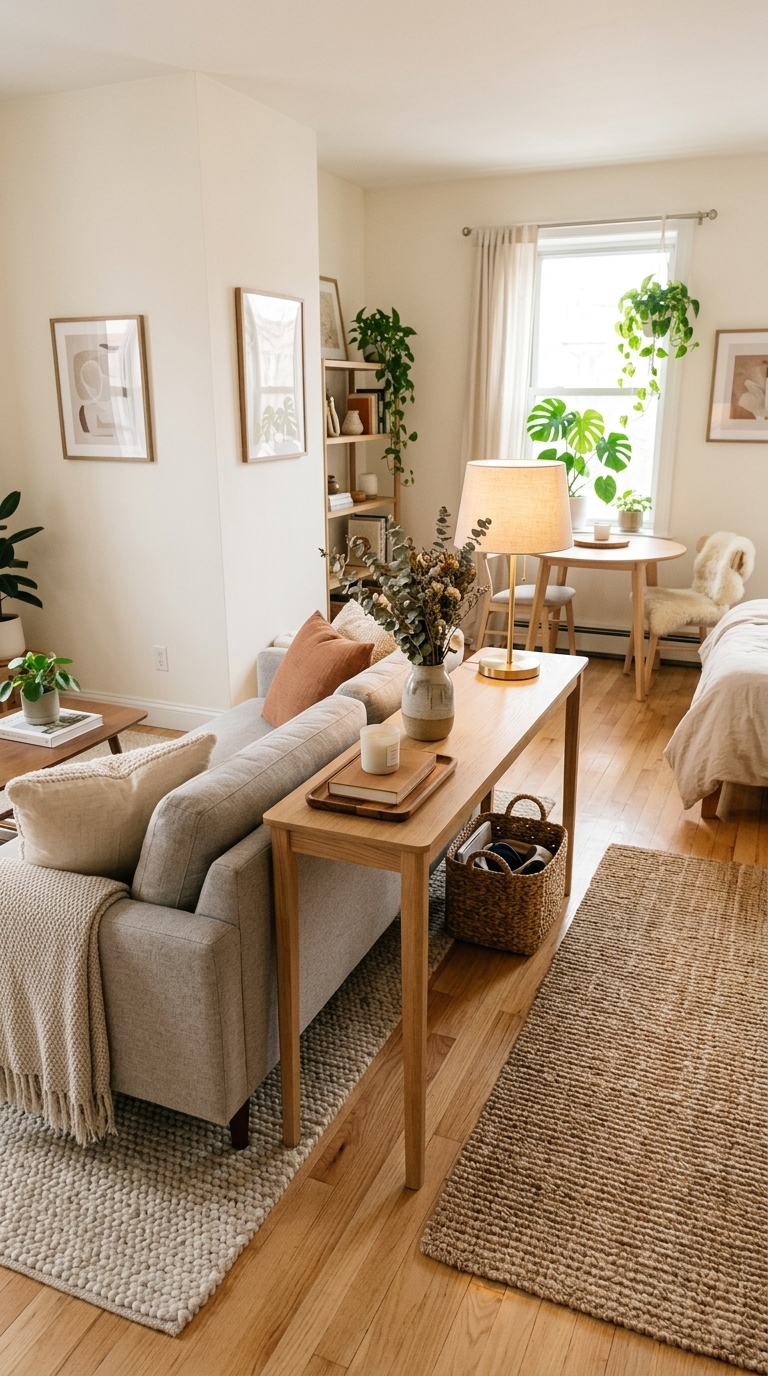
This setup features a narrow console table positioned to create a visual threshold between the living and dining/work areas. The styling—tray, lamp, vase, and storage baskets—keeps it functional while still feeling decorative. It’s perfect for studio apartments because it creates clear zones without narrowing your floor plan too much.
3. Create a “sleep nook” using bedding scale + a headboard moment
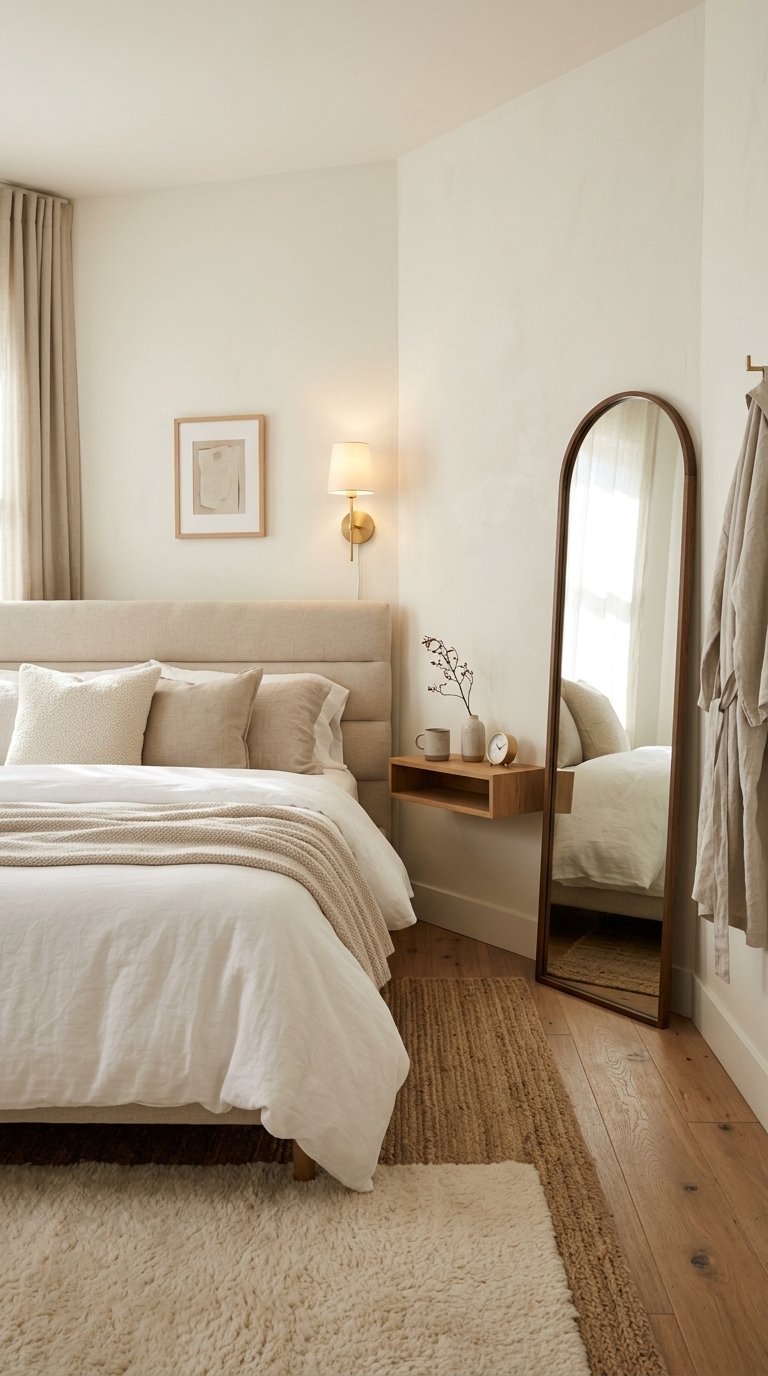
The photo highlights a bedroom zone that feels intentional through bedding scale and a distinct headboard wall moment. A layered rug and warm lighting make the bed read as its own area, while the mirror adds brightness and depth. Use this idea when you want your studio to feel restful at night—without sacrificing the openness during the day.
4. Define a dining spot with pendant lighting (even in a studio)
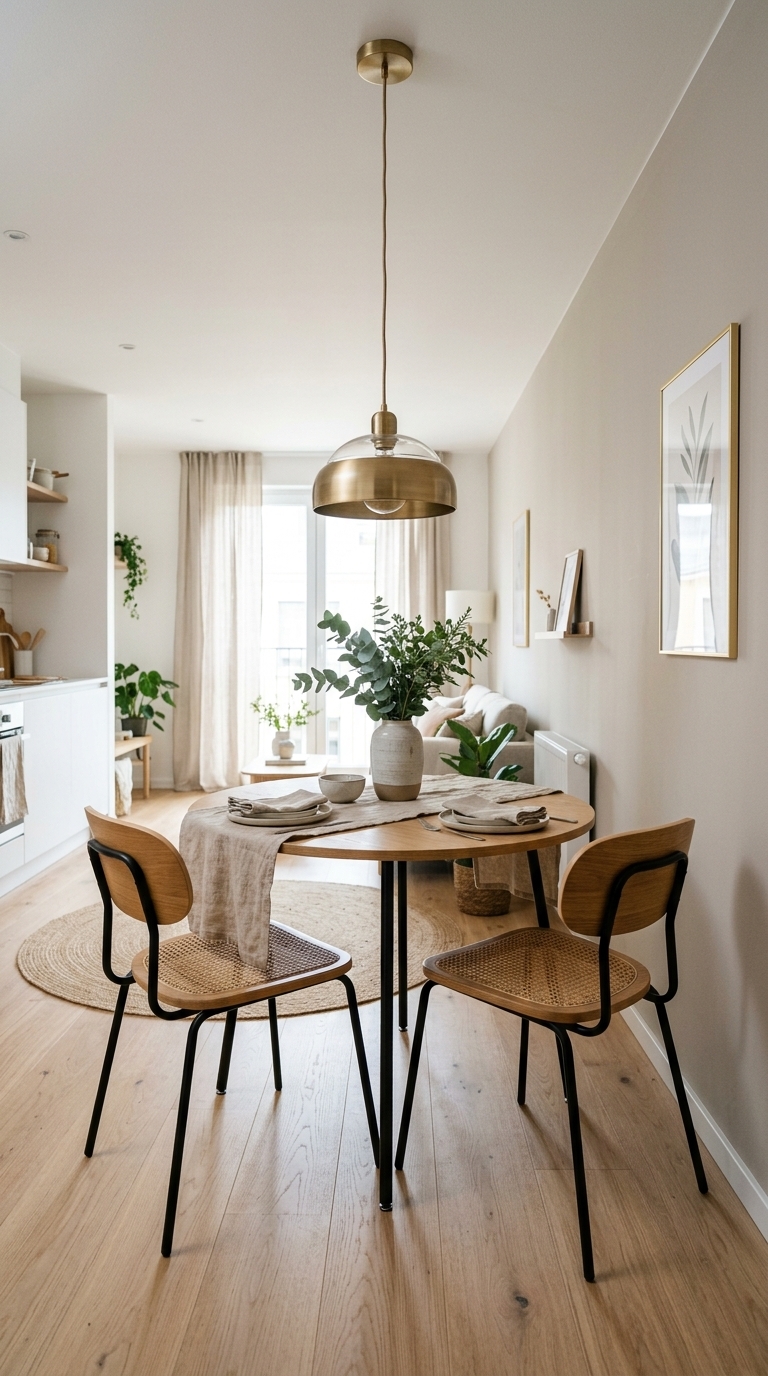
In the image, a dedicated dining zone is created by lighting—specifically a pendant that visually “claims” the eating area. The table styling (runner, vase, greenery) adds softness, while the open floor around it keeps the layout airy. This is a smart styling trick when you want clear zones without walls but still need the spot to feel special.
5. Layer light with a task lamp + ambient floor lamp for zones
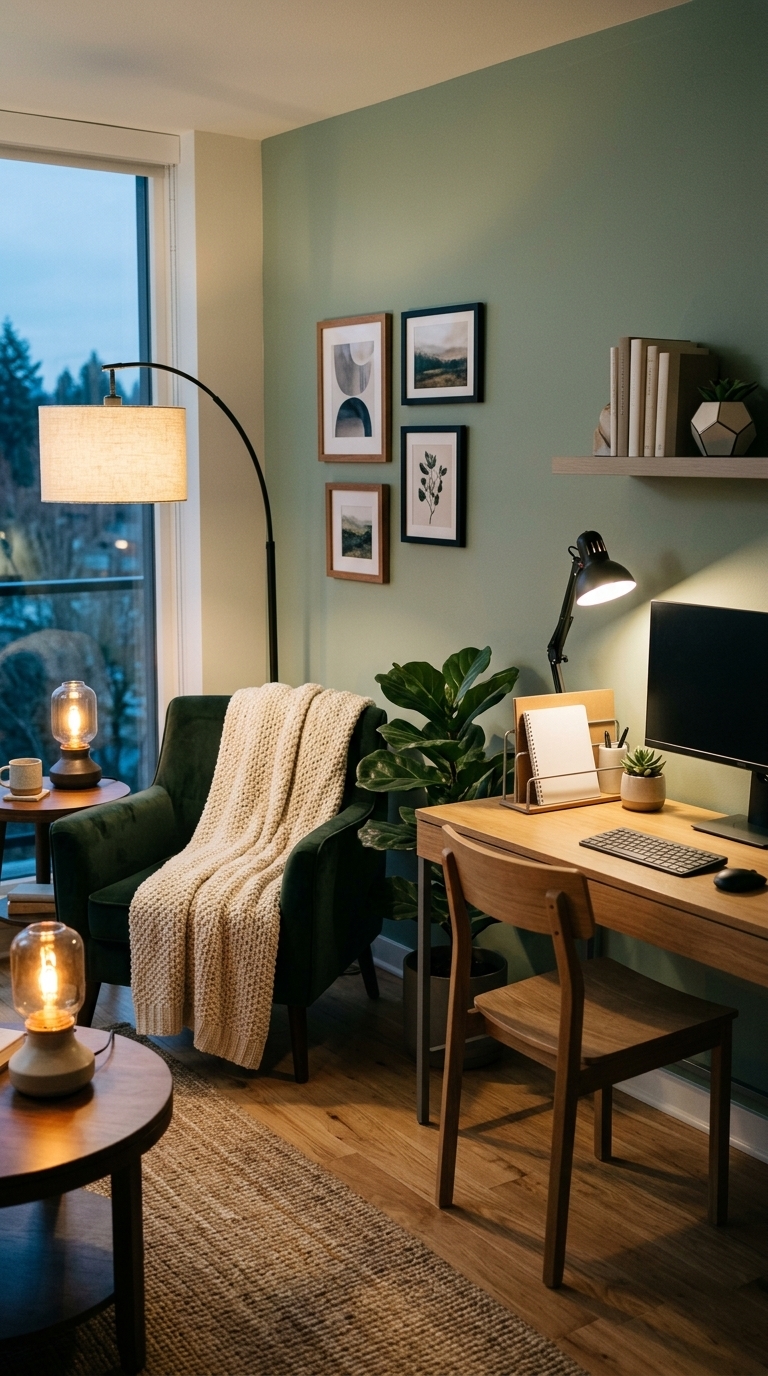
This image uses lighting as the zoning tool—warm ambient light for relaxing and focused task light for productivity. The two lamp placements create separate moods in one continuous room. It’s a great idea for studios because light boundaries are invisible, but they make the layout feel organized and comfortable from morning to night.
6. Use open shelving to separate without closing off the room
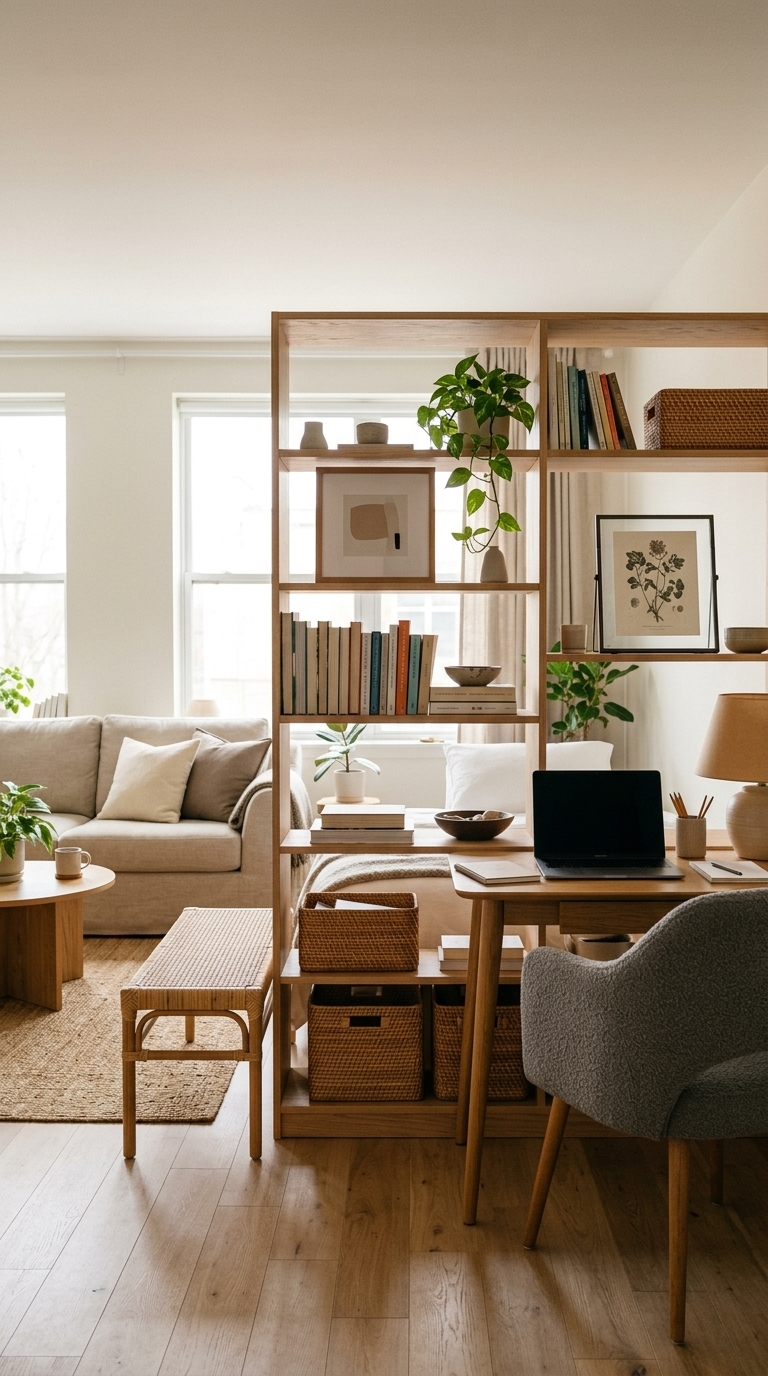
The photo shows an open shelving divider that separates zones while still letting light and sightlines travel through the studio. Because the shelves are airy, the room feels larger and brighter than a solid wall would. This works especially well for studios where you want storage plus zoning—perfect for keeping everyday items contained but styled.
7. Try the “two rug” trick: overlap different shapes for separate functions
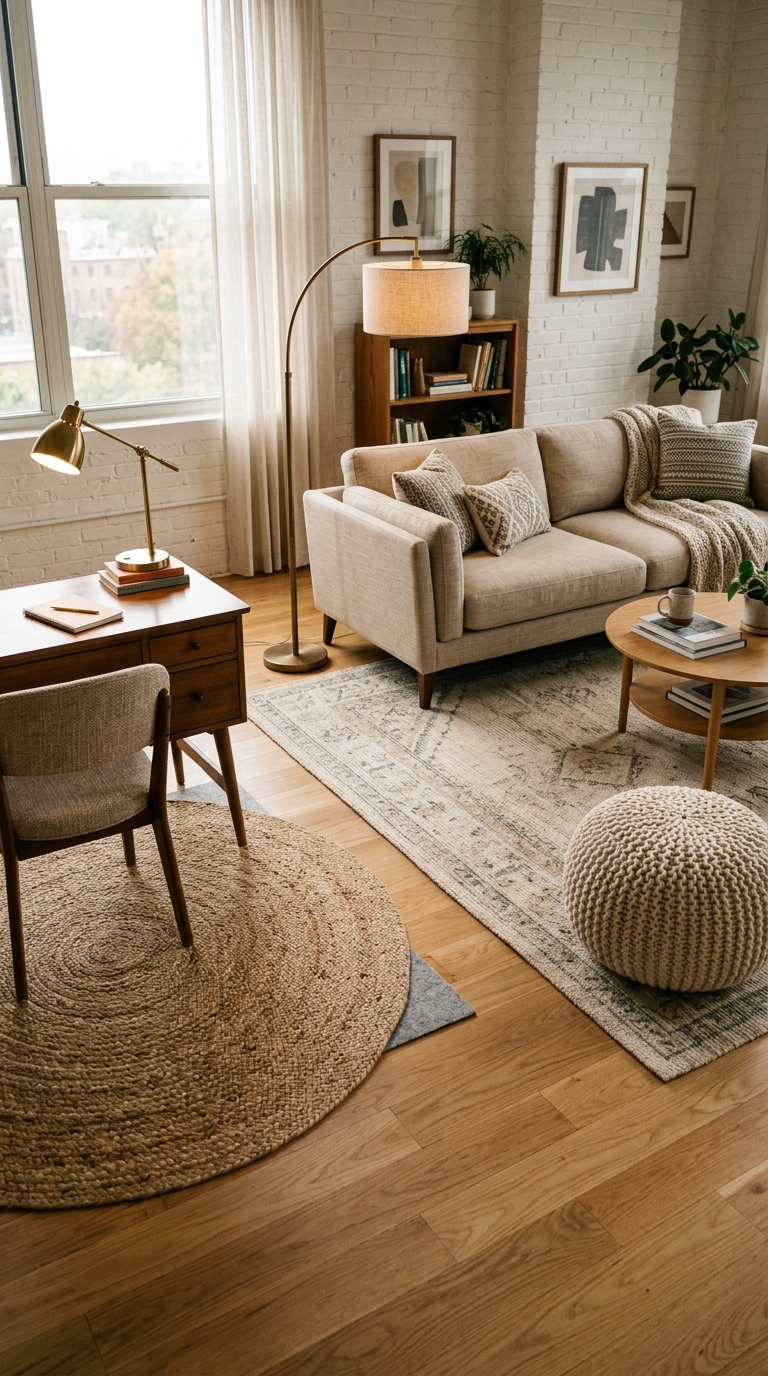
Here, zoning happens through rug geometry—one rug anchors the lounge, while a second rug marks a work or reading corner. The different shapes help your eye instantly recognize function, even when everything shares the same room. If you love a designer look, this “two rug” method makes studios feel intentional and layered without adding walls.
8. Make a gallery wall work harder by matching frame heights to zones
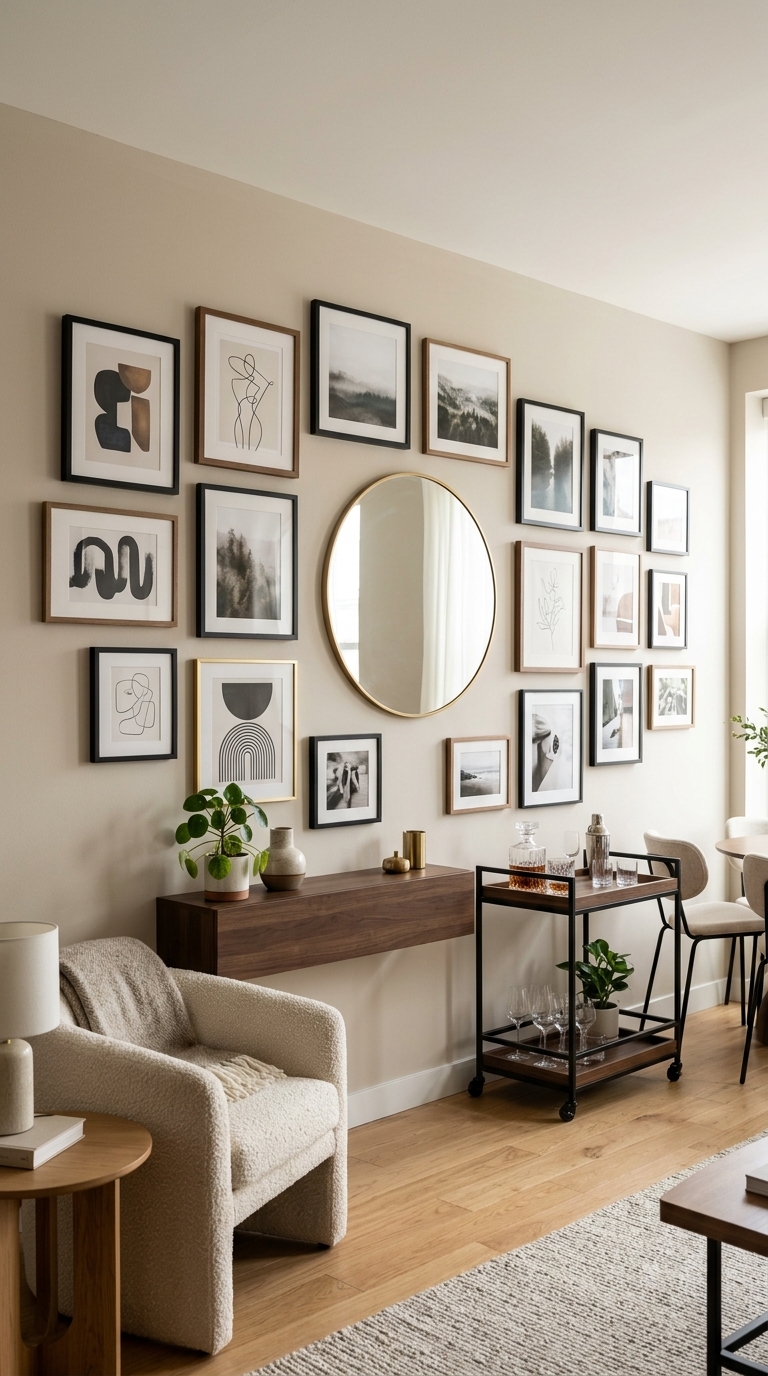
The image focuses on a gallery wall placed where two functional areas meet, using frame heights and spacing to visually guide the eye. The mirror and console keep the wall from feeling empty and add practical surface styling. It’s a stylish zoning strategy for studios—especially if you want separation that feels design-forward instead of divider-like.
10. Keep flow effortless with “landing pads” next to each function
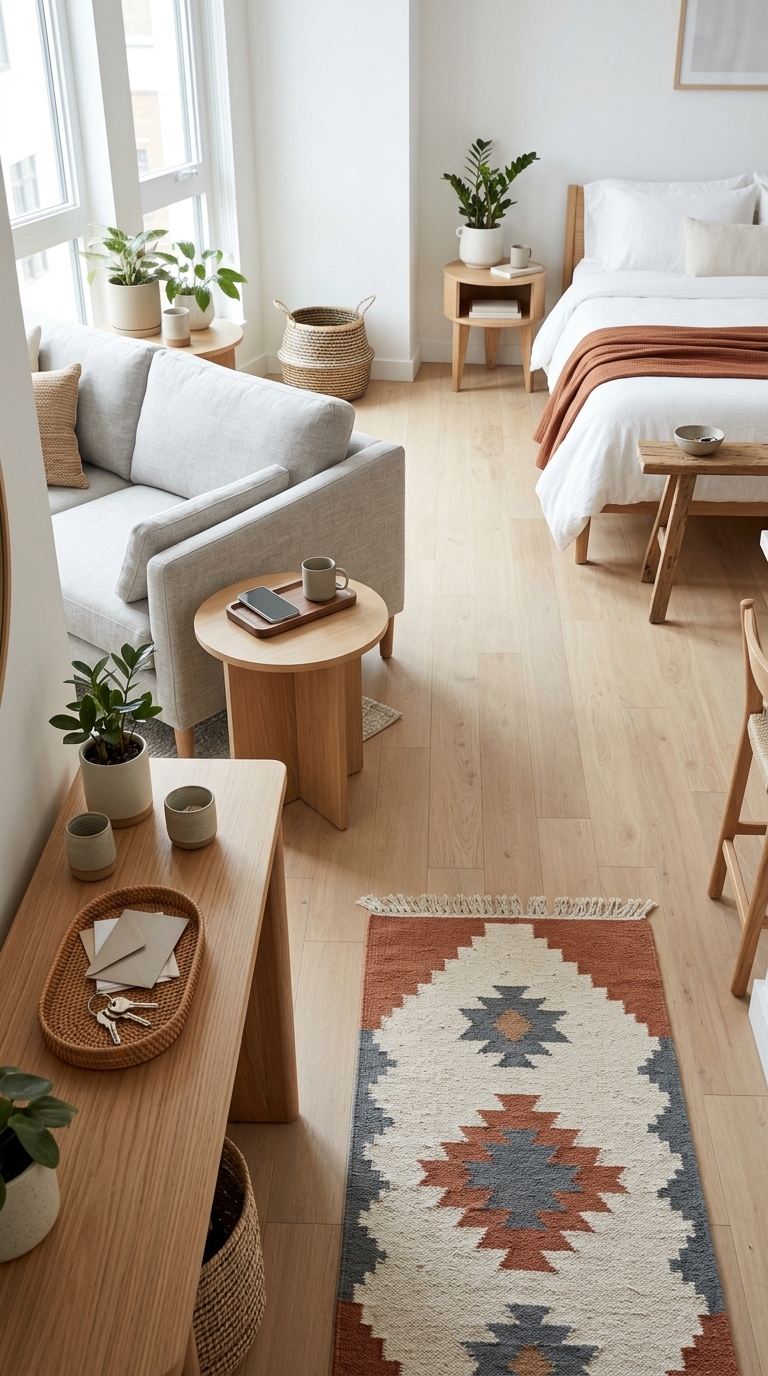
The image shows a practical zoning strategy: each functional area gets a small landing pad so everyday items have a home. This reduces clutter, makes the room feel organized, and gives each zone a distinct “purpose moment.” It’s a great studio refresh tip because it supports clear zones without walls while keeping your space looking styled, not busy.